
Understanding Linen: Why This Natural Fibre Belongs on Every Bed
Linen is one of those rare fabrics that feels better the more you live with it. There's a quiet comfort in climbing into a bed dressed in natural linen, a breathable, relaxed texture that settles around you without fuss. For Australian homes, where the weather shifts between warm days and cool nights, linen is a fibre that earns its place on the bed all year round. Understanding what linen is, how to care for it and what to look for when choosing sheets can make the difference between bedding you tolerate and bedding you genuinely look forward to.
Linen made for living
When life begins to demand more, we find ourselves seeking out the simple, joyful pleasures. Early morning awakenings, the sun peeking through curtains, surrounded by soft bedding and our loved ones. A long table laden with bright salads and heaped bowls of pasta, soft linen napkins tossed on the table as lunchtime drinks ease into evening aperitifs.
What is linen fibre?
Linen is a natural textile fibre made from the stalks of the flax plant. After harvesting, the flax stems are retted (a process that loosens the fibres from the woody core), then spun into yarn and woven into fabric. It's one of the oldest textiles in human history, and for good reason: flax produces a fibre that is naturally breathable, moisture-wicking and surprisingly strong.
The finished fabric has a distinctive feel. Linen's texture is lightly slubbed and cool to the touch, with a drape that sits somewhere between structured and soft. Its natural tendency to crease is part of its character, giving bedding a lived-in, relaxed appearance that pressed cotton simply doesn't replicate.
Good linen is made for regular use. Each wash relaxes the fibres a little more, so what starts as a slightly crisp, textured weave gradually becomes supple and easy against the skin. The fibre itself is durable. Well-made linen bedding can last for years, becoming more comfortable with age rather than wearing thin.
What is linen fibre made from?
Linen is made from the fibres of the flax plant. The stalks are harvested, the fibres are separated through a process called retting, and then they're spun into yarn and woven into fabric.
Are linen sheets good for summer in Australia?
Linen's open weave allows air to circulate freely, which gives it a cool, airy feel that many people find comfortable during warm Australian summers.
How often should I wash linen sheets?
Washing your linen sheets every one to two weeks is a good general guide, though this depends on personal preference, the season and how warm your home gets overnight.
Can linen sheets go in the dryer?
Check your care label first. Most linen can be tumble dried on a low heat setting. Remove the sheets while slightly damp for the best result.
Do linen sheets shrink after washing?
Some minor shrinkage can occur, particularly with the first wash. Pre-washed or vintage-washed linen has already gone through this process, so further shrinkage is minimal. Always follow the care label to reduce the risk.
Do linen sheets need ironing?
Not unless you want them to. Linen's natural creases are part of its character. If you prefer a smoother look, iron while slightly damp.
Why do linen sheets feel different from cotton sheets?
Flax fibres are naturally thicker and more textured than cotton fibres. This gives linen its distinctive slubbed hand feel and relaxed drape, compared to the smoother finish of most cotton weaves.
Linen made for life
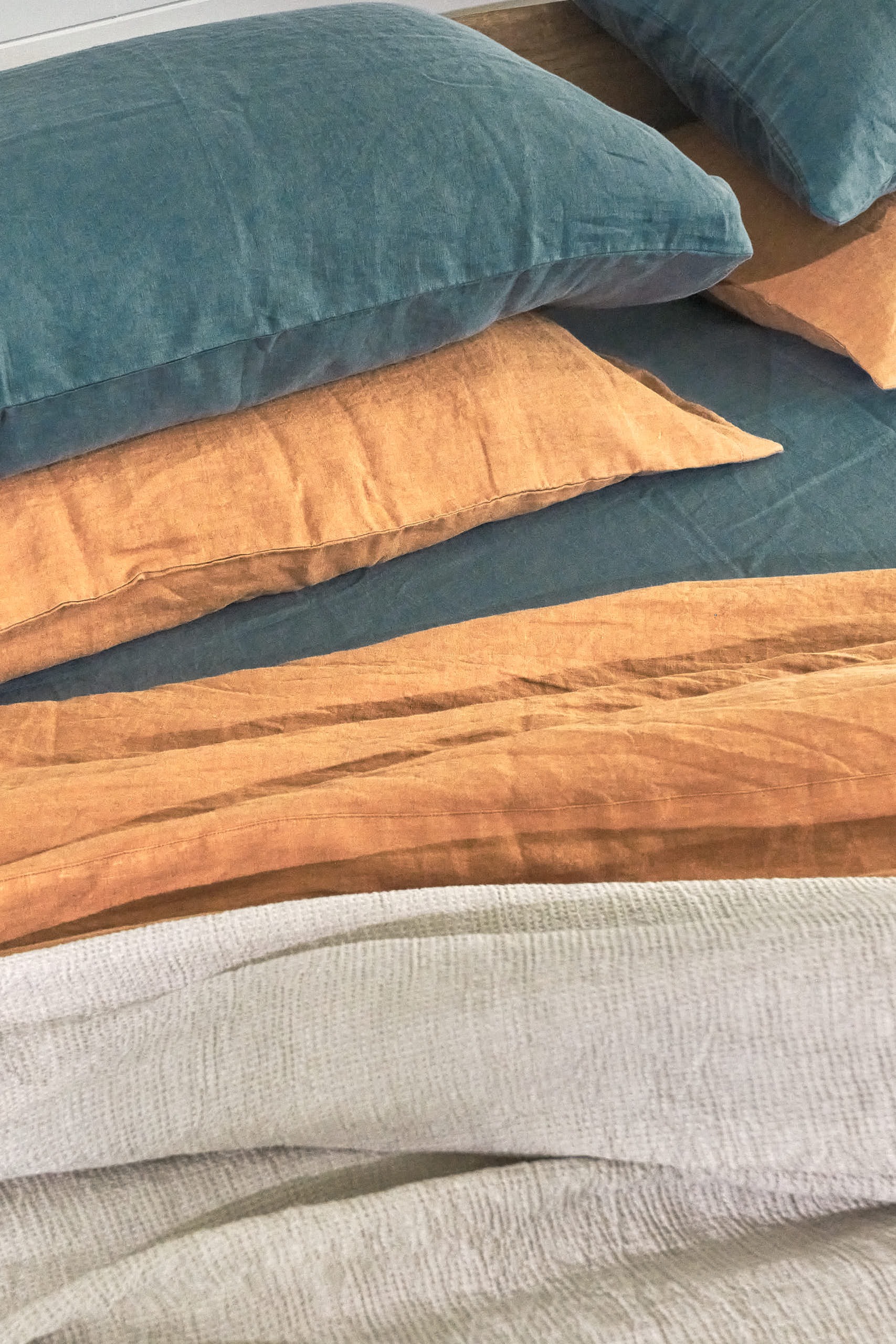
Embodying a slow fashion approach, each stage of the manufacturing process is considered and refined. Our linen is made from Belgian-grown flax, known for its versatility and resilience. Even when grown in poor soil, flax uses far less water and pesticides than cotton, and the fibre is harvested without waste. Every part of the plant is used, making production cost effective and earth-friendly.
We mill that flax fibre in Milan, where factories have been crafting linen for generations to exacting standards that ensure longevity and quality. The result is a fabric that is lustrous and flexible, stronger than cotton yet soft to touch. Linen is made for living, and we make linen for life. An investment upfront provides pieces that can be used for a lifetime, and indeed, beyond.
Linen sheets for Australian seasons
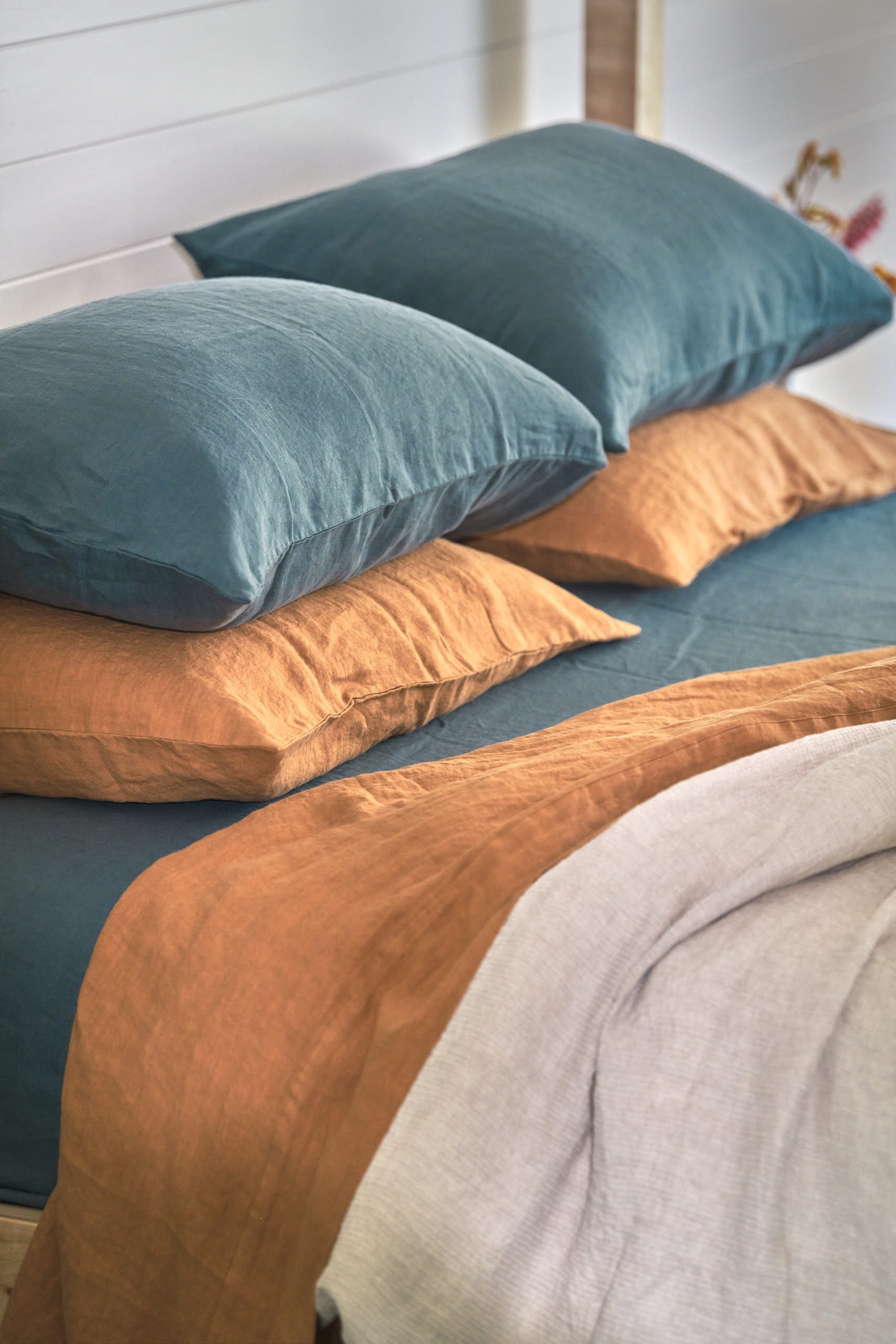
Australian homes deal with a wide range of conditions. Summer nights can be warm and still. Winter mornings, particularly in Melbourne, can feel brisk. And spring and autumn tend to swing between the two, sometimes within the same evening. Linen handles this well. Its open weave lets air pass through while the fibre absorbs moisture, giving it that airy, cool-to-the-touch feel in warmer weather. When the weather changes, the same fibre acts as a gentle insulator, holding warmth where it's needed without weight. That makes linen a genuine all-season fibre, not something reserved for warmer months.
Beyond the practical side, linen's relaxed finish suits the way most Australians want their bedrooms to feel: welcoming, unfussy and easy to maintain. There's no need to press or overly style it. A linen bed looks considered with minimal effort, which is part of its appeal for those who prefer natural fibres over synthetic alternatives against their skin.
Choosing the best linen sheets in Australia
Not all linen is created equal. A few practical considerations can help you find sheets that feel right from the first night and improve over time.
Start with the fibre and fabric origin
Look for bedding made from pure flax linen, and pay attention to where the fabric is sourced. European-grown flax, particularly from Belgium and France, has a long reputation for producing fine, consistent fibre. Transparent sourcing is a good sign. If a brand can tell you where the flax was grown, where the fabric was woven and where the finished product was made, that speaks to the care behind it.
Consider the weave and finish
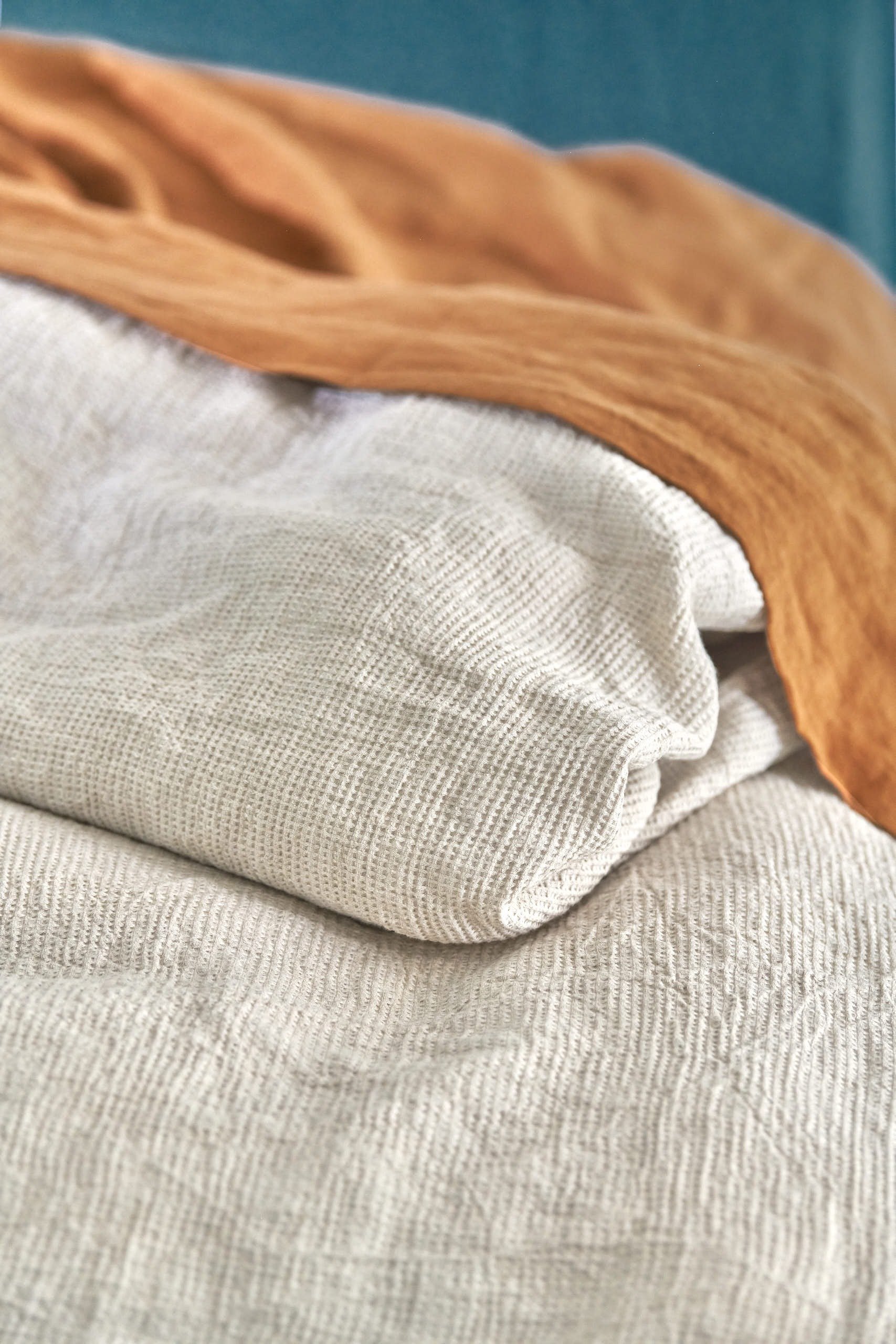
Linen can feel quite different depending on its weight and how it's been finished. A vintage-washed or pre-washed finish will feel softer and more relaxed from the outset. Unwashed linen may feel slightly crisper at first but will develop its own softness through use. Neither is better. It comes down to whether you prefer instant comfort or enjoy the process of a fabric settling in. For a finer weave, our Como fitted sheet is made from a rarer type of flax that Italians believe produces the world's best bed linen.
Choose a size that fits well
Before ordering fitted sheets, check your mattress depth. Standard fitted sheets may not sit snugly on deeper pillow-top or Euro-top mattresses, and a sheet that pulls free overnight quickly becomes frustrating. Extra-deep fitted options solve this neatly. Our Citi fitted sheet, made from vintage washed Belgian linen, is available in extra-deep queen and king sizes.
With an effortless simplicity, our Citi linen range is designed for living. Relaxed, casual, carefree. The perfect complement to our rushed, busy lives. Explore the Citi linen collection in nature-inspired colours and timeless neutrals.
Select colours you'll enjoy for years
Linen takes dye beautifully, but softer neutrals and tonal shades tend to age the most gracefully. Whites, natural flax tones, warm greys and muted blues are easy to layer with throws, quilts and cushions, and they won't tire quickly as trends shift.
Linen and cotton, side by side
Both linen and cotton are natural fibres, and both make excellent bedding. The choice between them is more about personal preference than one being objectively superior.
- Feel: Linen has a textured, relaxed hand feel that softens with use. Cotton varies widely depending on the weave: percale feels cool and crisp, sateen is smooth and silky, and flannel has a brushed warmth.
- Warm-weather comfort: Both breathe well. Linen's open weave gives it a particularly airy quality that many people prefer during Australian summers.
- Appearance: Linen naturally rumples and creases, which is part of its appeal. Cotton, especially percale and sateen weaves, tends to look smoother and more polished on the bed.
- Care: Both are machine washable. Linen's creases are accepted as part of its character, while cotton sheets may benefit from a quick press if you prefer a crisp finish.
The right choice depends on the feel, look and ritual you enjoy most. Some people keep both, rotating linen into warmer months and cotton sateen into cooler seasons, and either serves you well for years.

How to wash linen sheets
Caring for linen is straightforward. A few simple habits will keep your sheets looking and feeling their best for years.
Wash linen in cool or warm water
Follow the care label on your specific sheets. A gentle or normal cycle at a cool to warm temperature is generally all linen needs. Avoid hot washes unless the care instructions say otherwise.
Use a mild detergent
A gentle, liquid detergent is kinder to natural fibres than heavy-duty formulas. Avoid harsh bleach or optical brighteners, which can break down the flax fibres over time and dull the fabric's natural lustre.
Avoid overfilling the machine
Give your linen room to move freely in the drum. An overstuffed load creates friction and can press deep creases into the fabric that are harder to relax out during drying.
Dry gently and remove while slightly damp
Line drying in the shade is ideal where practical. If you're using a dryer, a low heat setting works well, but remove the sheets while they're still slightly damp. This makes them easier to smooth out and helps prevent over-drying, which can leave the fabric feeling stiff.
Air drying not only helps your sheets last longer, but it's good for the environment as well. And linen dries quickly, which means less time spent doing laundry.
Embrace linen's natural creases
Linen doesn't need to look pressed to feel considered. Its gentle creasing is a hallmark of the fabric. If you prefer a smoother finish, iron while the fabric is still slightly damp using a medium setting. But for most people, the beauty of linen is that it looks best just as it is.
Always defer to the care label on your specific product. Blends, dyes and finishes can all affect how a fabric should be washed and dried.

Softer with every wash
This is one of linen's most appealing qualities. Unusually among natural fibres, linen becomes both softer and stronger with each wash. The fibres relax with use, gradually developing a suppleness that new fabric can't replicate, while the weave itself holds firm. The sheets you sleep on a year from now will feel even better than they do on the first night.
This is where buying well genuinely matters. Linen made from fine flax and finished with care is crafted to be lived in, washed often and enjoyed for years, which is why it rewards everyday use rather than being saved for special occasions.

Outside-in living with linen
As days lengthen and weather warms, the divide between inside and outside living dissipates. Windows are thrown open to allow the breeze in, and dining moves outside to take advantage of later sunsets. Linen is made for this casual outside-in lifestyle with its effortless minimalist luxury.
The Citi collection heralds a range of colours inspired by nature, offering a timeless style for life indoors and out. From tablecloths to napkins, linen extends well beyond the bedroom into the spaces where you gather, eat and unwind.
We make our linen in Melbourne with our customers in mind. Each piece is hand sewn and finished to make sure no detail is missed. It gives our Citi linen collection an incomparable quality.

Styling a bed with linen
Linen's relaxed texture makes bed styling feel natural rather than fussy. The aim is simply a bed that looks inviting and feels comfortable.
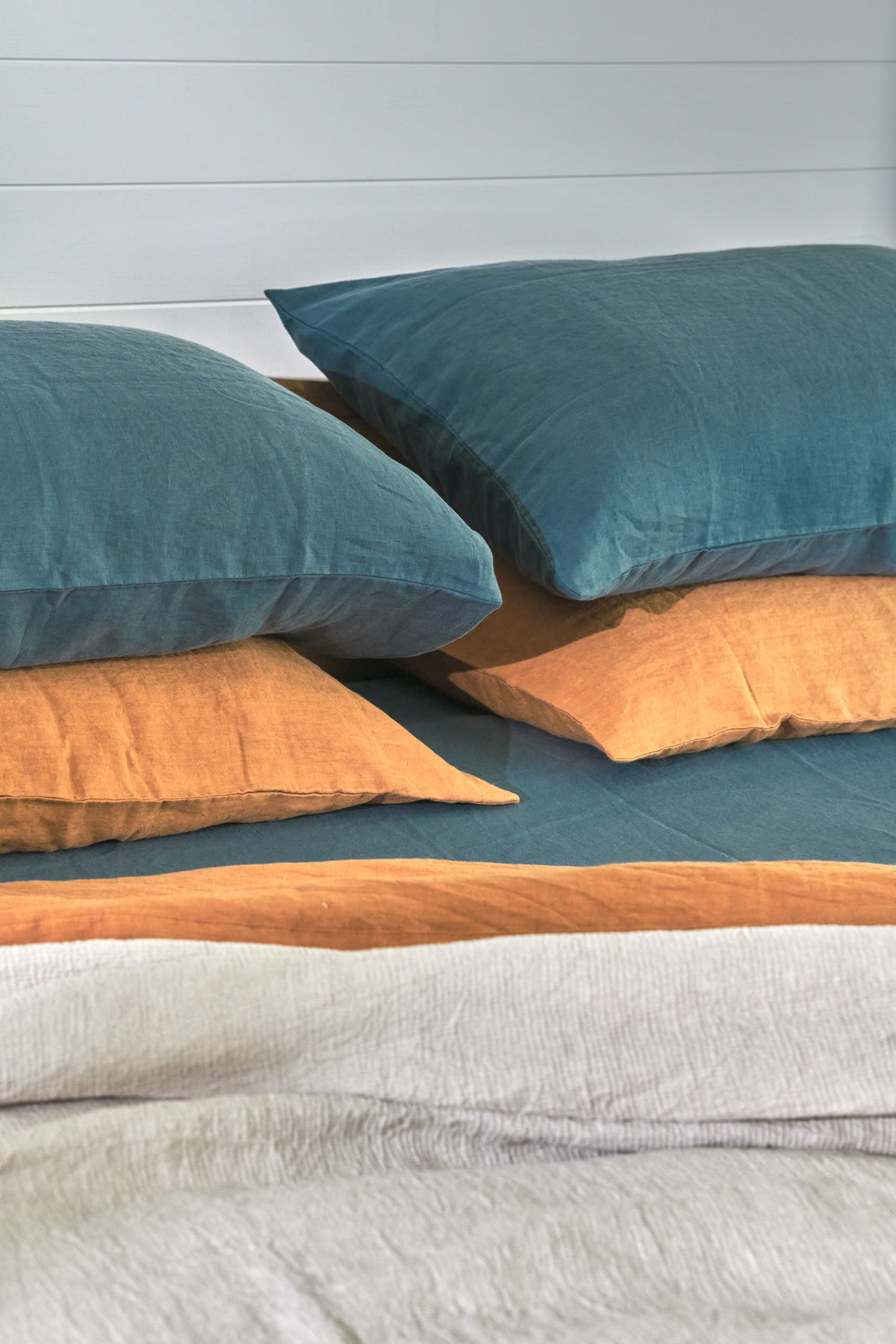
Start with a fitted sheet and flat sheet in a soft, tonal shade, such as a warm white, natural flax or a quiet grey. The Citi flat sheet is a classic starting point. Layer a linen quilt cover on top, such as the Citi quilt cover, then fold back the sheet and quilt to create a casual, open look. A lightweight blanket or coverlet across the middle of the bed adds warmth without bulk.
A textured throw draped at the foot of the bed brings depth and a touch of warmth for cooler evenings. Mixing complementary neutrals, rather than matching every piece exactly, keeps the bed looking intentional but not rigid. A pair of linen pillowcases in a slightly different tone from the sheet creates subtle contrast.
The beauty of linen bedding is that it doesn't demand much styling. A thoughtfully layered bed with natural textures and calm colours will feel welcoming without looking like it took an hour to arrange.

A note on linen quality
Thread count is a familiar measure for cotton sheets, but it's not the most useful indicator of linen quality. Flax fibres are naturally thicker than cotton, so linen typically has a lower thread count while still feeling substantial and refined. What matters more is the quality of the flax itself, the skill of the weaving and how the fabric has been finished. Craftsmanship, material provenance and attention to detail shape how linen feels against your skin and how it holds up over years of washing and use.
Frequently asked questions about linen sheets
What is linen fibre made from?
Linen is made from the fibres of the flax plant. The stalks are harvested, the fibres are separated through a process called retting, and then they're spun into yarn and woven into fabric.
Are linen sheets good for summer in Australia?
Linen's open weave allows air to circulate freely, which gives it a cool, airy feel that many people find comfortable during warm Australian summers.
How often should I wash linen sheets?
Washing your linen sheets every one to two weeks is a good general guide, though this depends on personal preference, the season and how warm your home gets overnight.
Can linen sheets go in the dryer?
Check your care label first. Most linen can be tumble dried on a low heat setting. Remove the sheets while slightly damp for the best result.
Do linen sheets shrink after washing?
Some minor shrinkage can occur, particularly with the first wash. Pre-washed or vintage-washed linen has already gone through this process, so further shrinkage is minimal. Always follow the care label to reduce the risk.
Do linen sheets need ironing?
Not unless you want them to. Linen's natural creases are part of its character. If you prefer a smoother look, iron while slightly damp.
Why do linen sheets feel different from cotton sheets?
Flax fibres are naturally thicker and more textured than cotton fibres. This gives linen its distinctive slubbed hand feel and relaxed drape, compared to the smoother finish of most cotton weaves.
If you'd like to feel the difference for yourself, visit our Camberwell showroom or explore our linen sheets collection to find the right fit for your bed.